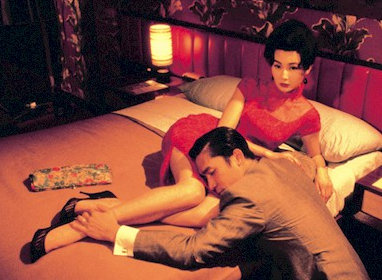
Chinese New Year is when a kind of collective madness descends on Chinese people all over the world. No other holiday even comes close. Masses of workers making their once-yearly pilgrimage to the countryside cause transit nightmares in China. In Los Angeles, restaurants and supermarkets shut down. In Malaysia and Singapore, days of cooking culminate in the traditional New Year’s Eve family banquet. Not going home for New Year’s is unthinkable. Well, if you had been disowned you could probably avoid it but even then, I think you would still be expected to show up in the street outside, kneeling in tears for parental forgiveness (the plot of many Chinese soap operas).
Unsurprisingly, all of this eating, mahjong-playing, and giving of hong bao (red cash envelopes) is an invitation to largesse in more ways than one, but I’d like to share a secret diet aid that Chinese women have been relying on for years. All you need to do is squeeze into a body-hugging cheongsam or qipao, which is fortunately always in fashion at this time of year. I recently had to do this when I attended a formal Chinese New Year banquet and discovered, to my dismay, the efficacy of this garment.
But first, a brief history. This high-collared dress is actually not Chinese at all. It’s a derivative of Manchu clothing, which Chinese people were forced to adopt when the Manchus (a non-Chinese tribe from the north) defeated the Ming dynasty in 1644. Originally, Manchu robes were loose and somewhat shapeless, but by the 1920s, they had transformed into the fashionably tight, form-fitting sheath so beloved of Hong Kong movie stars.
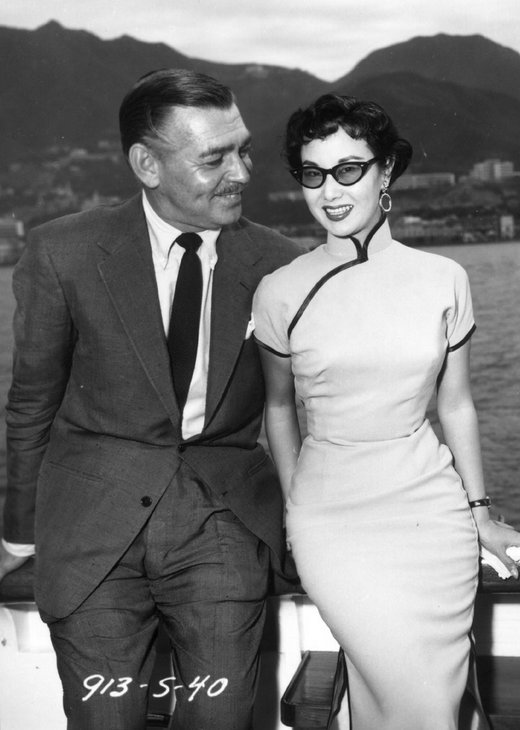
The Cheongsam Diet:
- A few days prior to the event, try your cheongsam on repeatedly. You will find that no matter how nicely fitted it originally was, it is always too small on the day of the event, so plan accordingly.
- On the big day, suck in your stomach and squeeze into your dress. The unforgiving silhouette will cause you to automatically straighten up and adopt the posture that your mother has been nagging you about for years.
- Add a pair of dainty high heels. No cheongsam looks good with flats or (horror!) slippers or clogs. I like to think that this echoes the teeter-tottery shoes that Manchu women wore to imitate the bound feet of Chinese women, but the truth is, with a dress like this that’s basically a sausage covering, you should shamelessly exploit all options to appear willowy. (“Willowy” being a favourite classic Chinese description).
- A further note about heels — no platforms please! Platforms are the antithesis of “willowy”.
- When you arrive at your event, you will discover that it is extremely difficult for you to stand up and sit down without exposing yourself to everyone in the room. This, along with your high heels, will deter you from multiple trips to the buffet table.
- If you should actually manage to snag a plate with food, you will be unable to eat large quantities because of the highly restrictive Mandarin collar. I was forced to watch my husband devour the duck on both our plates because I literally could not swallow large mouthfuls.
As I tottered home at the end of a lavish evening, I realized it was the first time in a long while that I hadn’t stuffed myself. Compared to my date who had ingested most of my meal as well as his, I felt relatively bloat-free. Still, the lack of food made me cranky (now I understand why models have perpetual frowns) and sadly, the diet lasted only as long as the dress was worn. Which leads me to think that the cheongsam is only a temporary solution, unless, like Maggie Cheung in the ultimate cheongsam movie In the Mood for Love, you have one for every day of the year.
Suggested Snack:
- None. Or weak sips of Chinese tea
Photo credits: 1. Still from the movie “In the Mood for Love”. 2. Clark Gable and Li Lihua, Associated Press Dec. 3, 1954.
Happy new year! If you enjoyed this post, follow me on Twitter or like my Facebook page.


 Yangsze Choo
Leave a reply to Sophie Cancel reply